I can smell gas in my house, exactly what to do, in order
Don't switch anything on or off. Don't strike a match. Don't use the doorbell. Here's the right order of actions in the first 60 seconds, and the number to ring before you ring us.
If you can smell gas in your house right now, stop reading and do the steps below in order. The article goes into the why, but the order matters more than the why.
The first 60 seconds
Gas leaks are dangerous because of two things: the chance of an ignition, and the chance of breathing too much of it. Both go up the longer you stay in the house, and both go down the moment you get out. So the first 60 seconds are about not making things worse.
Don’t do any of these:
- Don’t switch any electrical appliance on or off, including the lights. The tiny spark inside a switch is enough to ignite a gas-air mixture in the right concentration. The light is fine if it’s already on. Leave it on. The light is fine if it’s already off. Leave it off.
- Don’t strike a match, light a hob ring, or use a lighter. Obvious, but worth saying.
- Don’t use the doorbell. Doorbells are switches.
- Don’t use your mobile phone or a cordless phone inside the house. Make calls only once you’re outside.
- Don’t use the lift if you’re in a flat. Take the stairs.
Get everyone out
Adults, kids, dogs, the cat if you can find it without spending five minutes on the search. The point is to get the house empty before any other decision gets made. Stand on the pavement, on the driveway, in the front garden, anywhere outside.
If a neighbour is closer than the road, knock and ask if you can wait there. People are kind in an emergency, and you don’t want to stand on a wet pavement with kids in pyjamas while you ring 0800.
Open every door and window on the way out
Ventilate the house as you leave. Front door wide open, back door wide open, every window you walk past on the way out. The gas needs somewhere to go, and the more air you give it the faster the concentration drops below the danger threshold.
This step is the one people most often skip in the panic. Do it anyway. It costs nothing and it can be the difference between a scare and a serious incident.
Turn off the gas at the meter (only if you can do it safely)
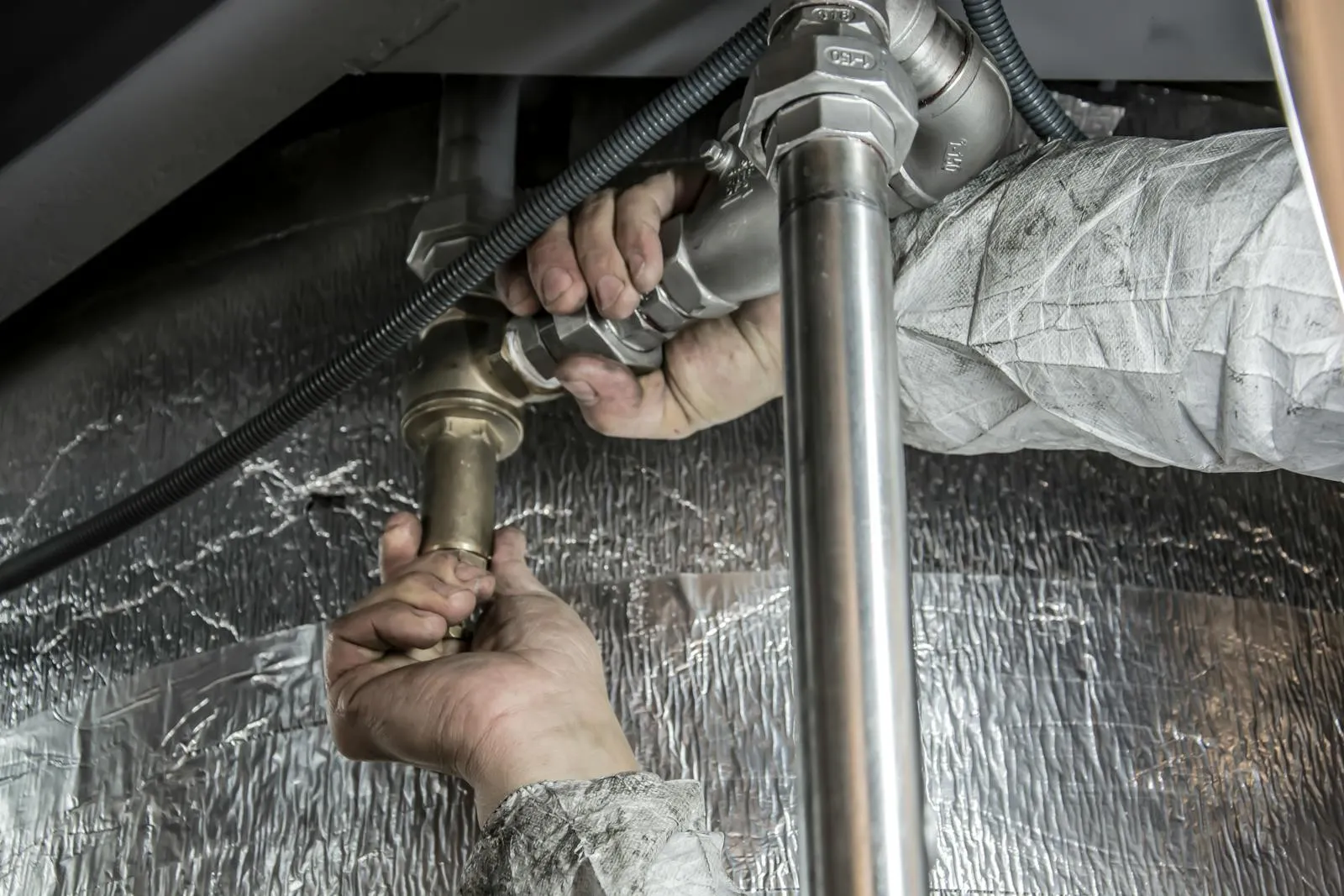
Most UK homes have a gas meter either by the front door, in the garage, or in a small box on an outside wall. There’s a lever-style isolation valve next to the meter (it’s called the Emergency Control Valve, or ECV). Turning the lever 90 degrees so it’s perpendicular to the pipe shuts the gas off to the whole house.
If the meter is outside, or just inside the front door, do it. If the meter is in a cupboard you’d have to walk through the house to reach, don’t. Get out, ring the gas emergency number, and let them turn it off when they arrive.
Ring the National Gas Emergency Service: 0800 111 999
From a phone outside the house. 0800 111 999. Free, 24 hours a day, every day of the year, including Christmas. Save the number in your phone right now if you haven’t already.
They’ll ask for the address, what you can smell, whether anyone is feeling unwell, and whether the gas is still on. They will dispatch an emergency engineer, usually within an hour anywhere in the Reading area. The engineer will make the property safe (turn the gas off at the ECV, isolate the appliance, vent the house). They will not, in most cases, repair the leak: that’s a separate Gas Safe job, which is where we come in.
Then ring us
Once the property is made safe, you’ll need a Gas Safe registered engineer to find the leak, repair it, recommission the appliance, and certify the house safe to turn the gas back on. We carry the kit for that on every van. Ring us on the number on the top-bar of this site, tell us the emergency engineer has been, and we’ll come the same day if it’s in Reading.
What to expect when the emergency engineer arrives
They’ll arrive in a marked van, usually within 60 minutes. They’ll use a sniffer (a calibrated gas detector) to find the source of the smell, and they’ll either:
- Find a faulty appliance (most often a hob, a boiler, or a fire), isolate it, and tag it with a yellow warning sticker saying not to use until repaired by a Gas Safe engineer.
- Find a leaking pipe, isolate the gas at the meter, and leave the property tagged off.
- Find no leak inside the house, in which case the smell came from a neighbour’s property or from outside, and they escalate it to the National Grid for the underground supply.
In every case, you’ll get a paper or PDF report telling you what was found, what was made safe, and what needs doing next. Keep that report. We’ll need it when we come out to do the repair.
Why you should never DIY a “small leak”
We’ve had calls from people who tightened a fitting on a gas pipe themselves, with a spanner, and then asked us whether they could turn the gas back on. The answer is no. A gas leak repair has to be pressure-tested at 25mbar over a period long enough to prove the leak is genuinely sealed, with a calibrated manometer, by a Gas Safe registered engineer. There’s no version of that you can do with a Wickes spanner and a YouTube video.
Gas Safe registration costs us money, takes years of qualifications to maintain, and exists for one reason: this kind of job. It is not snobbery. It is the law, and it’s the law because of houses that aren’t there any more.
One last thing: trust your nose
The natural-gas smell (mercaptan, the chemical added to mains gas to make it noticeable) is unmistakable once you’ve smelled it. If you think you can smell it, you can. Don’t wait until you’re sure. Get out, ventilate the house, and ring the emergency number. The worst case if you’re wrong is half an hour standing on the pavement. The worst case if you’re right and you don’t do anything is much, much worse.
About the author

Tom Northgate
Owner, Gas-Safe engineer
22 years on the tools
Started his apprenticeship in 2003, qualified in 2007, set up Northgate in 2011 after a decade with a Reading installer. Still does install surveys himself.
More from the blog
See all articles On the job
On site this week: replacing a 35-year-old Worcester boiler in Earley
A 1991 floor-standing Worcester finally locked out for good. Here's what we put in its place, why, and what the customer paid.
 Advice
Why is my boiler losing pressure (and when to actually worry)
Topping up the system once a year is normal. Topping it up twice in a week isn't. Here's how to tell the difference, plus the three causes worth ringing about.
 Advice
How long should a boiler actually last? (And how to make yours last longer)
The honest answer is 10 to 15 years for a combi. Most don't. Here are the four things that genuinely buy you another five years on the back end.